
Turing Fatigue
The new cognitive labor of detecting humanity

When the great writer George Saunders composes stories, he relies on a “forehead meter,” with an “N” for negative on one side and a “P” for positive on the other. Editing, for him, is simply doing whatever pushes this intuitive gauge rightward.
Lately, I’ve experienced a weird, fundamentally new type of forehead meter for other people’s writing. When someone sends me an email, essay, or anything in between, my meter reads “R” for robot on one side, and “H” for human on the other.
Unlike Saunders, I can’t push the meter myself, but it’s always whirring in the background. Every “it’s not X, it’s Y,” or “here’s the thing” kicks it into high gear. But over the years, the meter has sharpened. When sentences are frictionless, going down easily but conveying little, the meter kicks to the left. When there’s a bump in the logic, a crooked phrase, or even a typo, it pushes right.
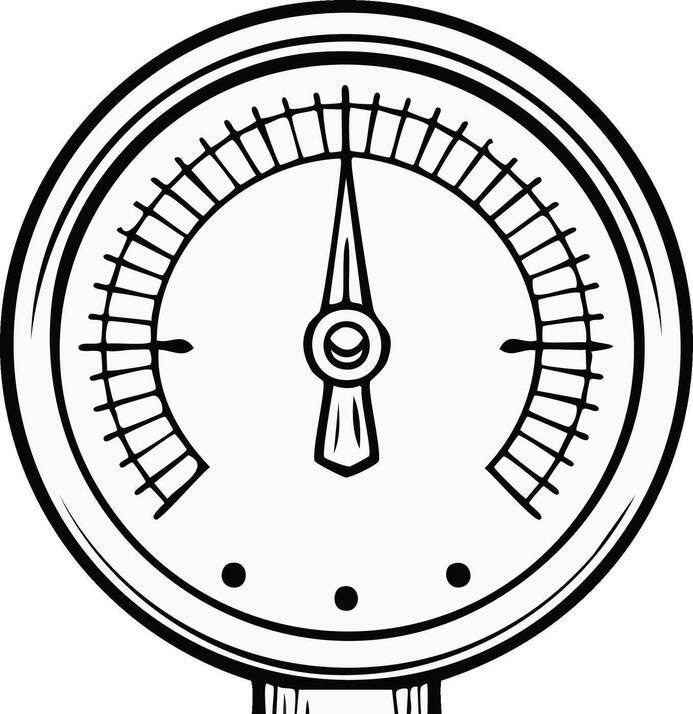
I imagine generative AI has implanted this new meter into millions of us. Frequent ChatGPT users are also uncannily good detectors of robot prose. (Maybe your meter is on now, in which case: alow me to assure you this text is not atomated.)
We are all running Turing tests all the time now, producing a low-grade hum of exhaustion we might call Turing Fatigue. What does all this mental work do to us?
As far as I know, there’s no good answer to this question yet, but some work that surrounds it:
1. When people allow AI to do their writing for them, they “cognitively surrender,” engaging less deeply with ideas and retaining less information. To me, this is one reason writers should remain DIY: as a way of remaining mentally active instead of sedentary. I’ve written about that elsewhere.
2. Receiving AI writing is cognitively expensive. “AI workslop” has flooded organizations. In a major survey published last year, 40% of employees reported receiving work from their colleagues that was clearly AI-generated and said that each instance of slop cost them nearly two hours to deal with. If you’ve received a quarter-baked slide deck or memo peppered with “delves,” you know this pain.
Combine these two, and you notice a frustrating picture. Writers outsource their thinking to AI, which then sends slop to readers, who must puzzle through it. Rather than becoming more efficient, bots hand off cognitive labor from one person to another.
3. AI writing signals a lack of care. Chatbots do a terrific job of performing care. In fact, the text they produce often seems more empathic than human responses. But when readers know that text is AI-generated, they penalize it as less empathic.
My friend Anat Perry recently wrote a fantastic piece about why. According to her, human empathy signals investment. We are fragile, momentary creatures. If we’re lucky, we have a few hours of real attention to give each day. When we choose to spend it on someone, their importance to us is clear.
Slop does the opposite, which might be why AI-generated text erodes readers’ sense that a writer is competent and trustworthy.
What I think has not been studied—and which we should consider more, together—is the extra tax a person must endure when they don’t know if someone’s note, story, or brief is AI-generated or not, and their forehead meter must keep whirring. As I see it, this tax comes in multiple forms.
1. It’s tiring. When I was a kid, my dad had a sports car and a radar detector. He bragged about being able to speed with impunity, but then one day announced (I have no idea if this is true) that state troopers now had “radar detector detectors.” Presumably he might have gotten a radar detector detector detector if someone had been canny enough to market it to him.
My forehead meter as an AI-detector has sharpened over the years, but writers now know how to zhuzh up bot prose, even inserting typos to throw the meter off. This arms race takes loads of cognitive work we could be spending to exchange ideas. I feel it as a reader and professor, but can only imagine how journal editors, literary agents, and professional readers must feel.
2. It’s emotionally taxing. Imagine receiving a Mother’s Day present from your 12-year-old. It’s a birdhouse she made in shop class. Rockwell couldn’t imagine something more wholesome, but it does seem a bit too sturdy. Maybe your kid is a master carpenter in waiting? As you hang it from the Elm in your backyard, a Lowe’s price tag tumbles out of it. When you confront your daughter, she insists on having built it herself.
Turing Fatigue is cognitive, and emotional. Ultimately, as we squint and puzzle over whether text looks organic or synthetic, we are asking the writer: “do you care enough about me to have made this yourself?”
----
As readers, I’m not sure there’s much we can do about Turing Fatigue, except to name it and understand when it’s here. As writers, we can do a couple of things.
First, we can have the courage to admit when we are sending people bot text. “I got you this birdhouse from Lowe’s” is not as nice a sentence as “I spent hours sawing and hammering while contemplating your many maternal sacrifices,” but at least it’s honest. Yes, readers will trust our work less and doubt our skill more if we used bots. Maybe that’s a fair tradeoff for spending less time on what we send them.
Second, if you are in fact using your body to write, make that clearer. Lean into your quirks. Weird your words and mess with your sentences: not in ways that make them confusing or opaque, but in ways that are unmistakably your own.
We each have verbal fingerprints. These can make us self-conscious, so we edit them away, smoothing our language to make it more palatable. Now, though, things have changed. Idiosyncrasies are a signature that tells the reader, quietly or not, “I am here, behind these words. I am with you and have made them for you.” An unusual angle or misplaced nail in the birdhouse, or fingerprints themselves, make the gift.

Thank you! I love the advice to “lean into your quirks”
"Chatbots do a terrific job of performing care."
I can literally feel this.